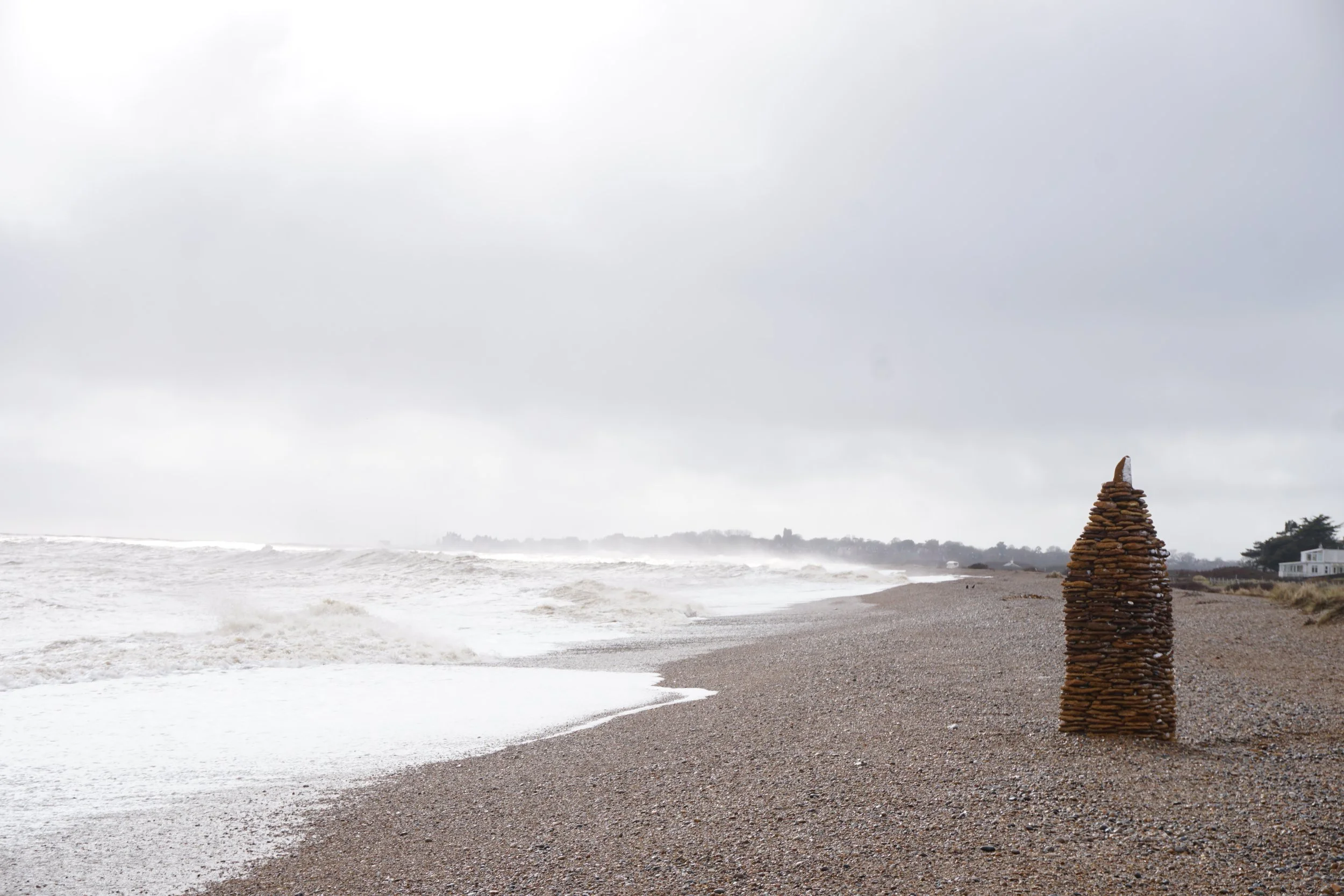
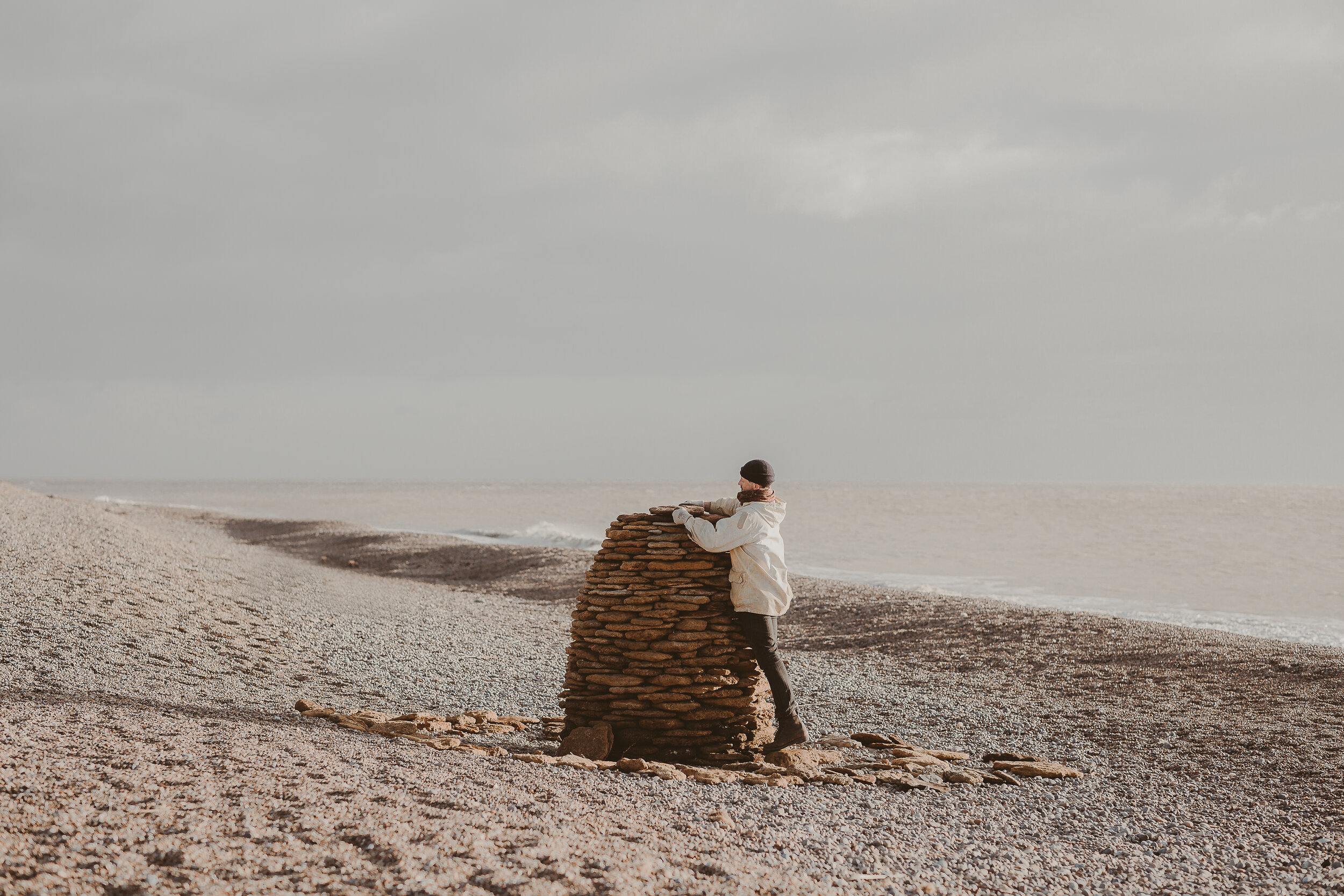
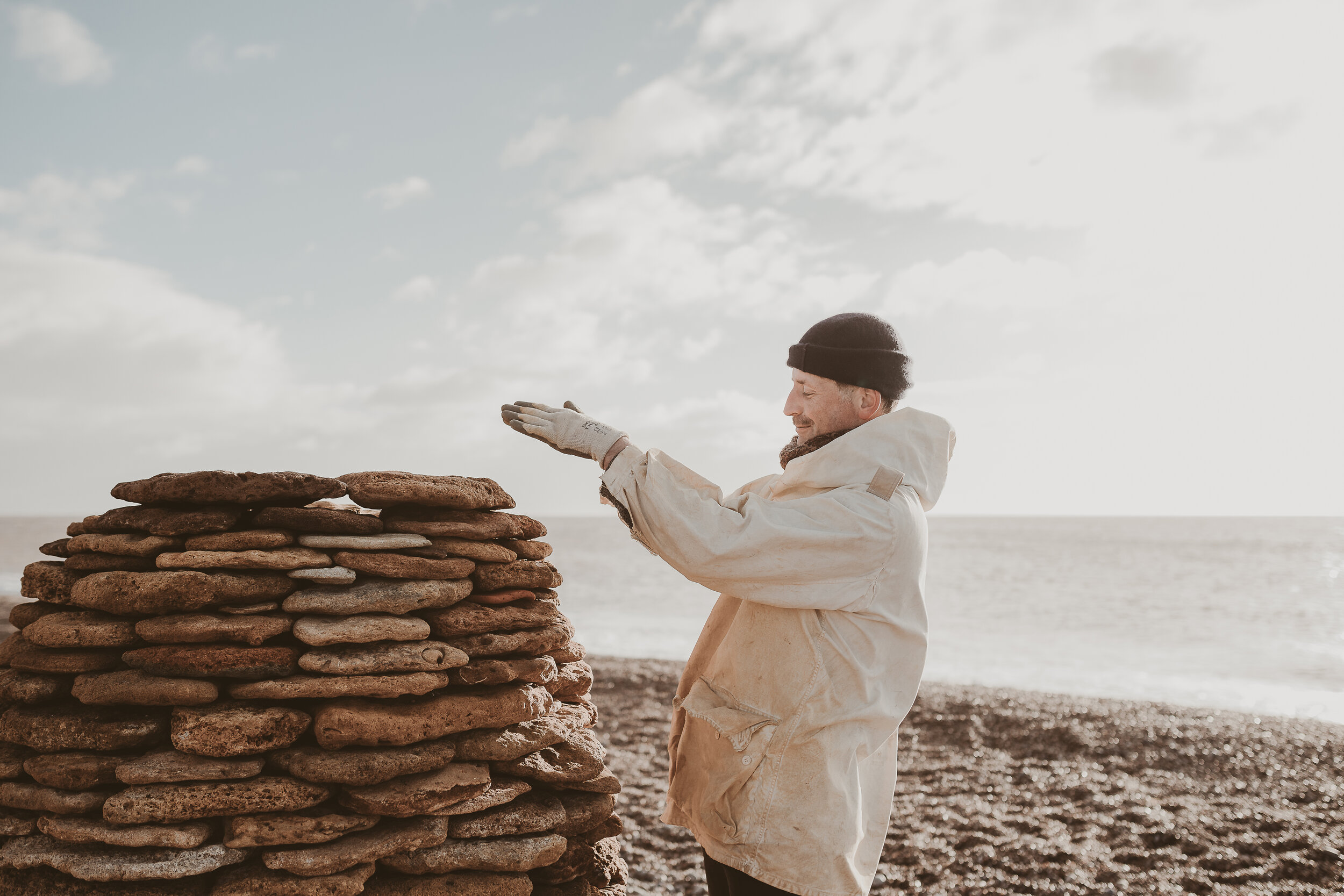
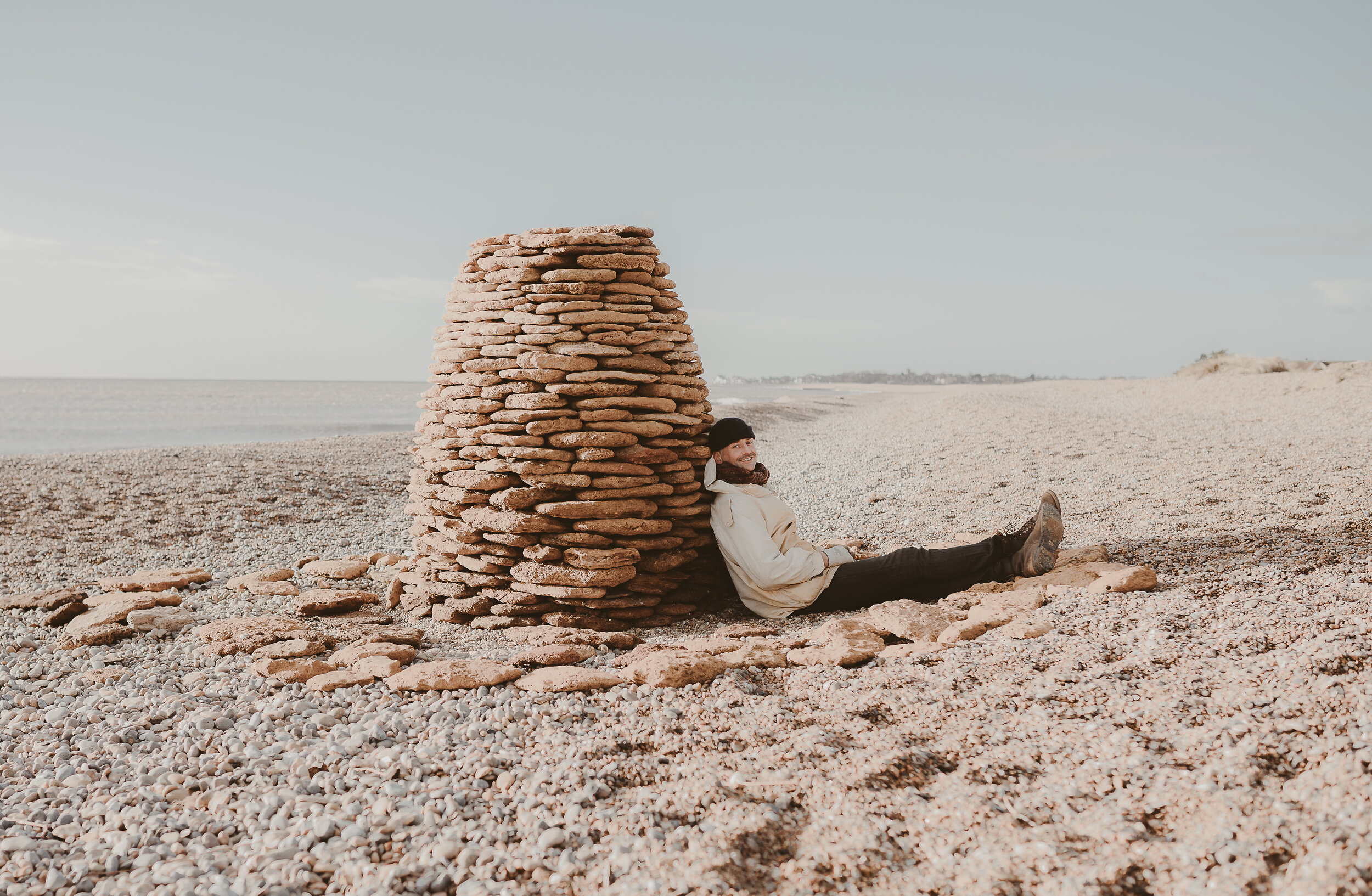
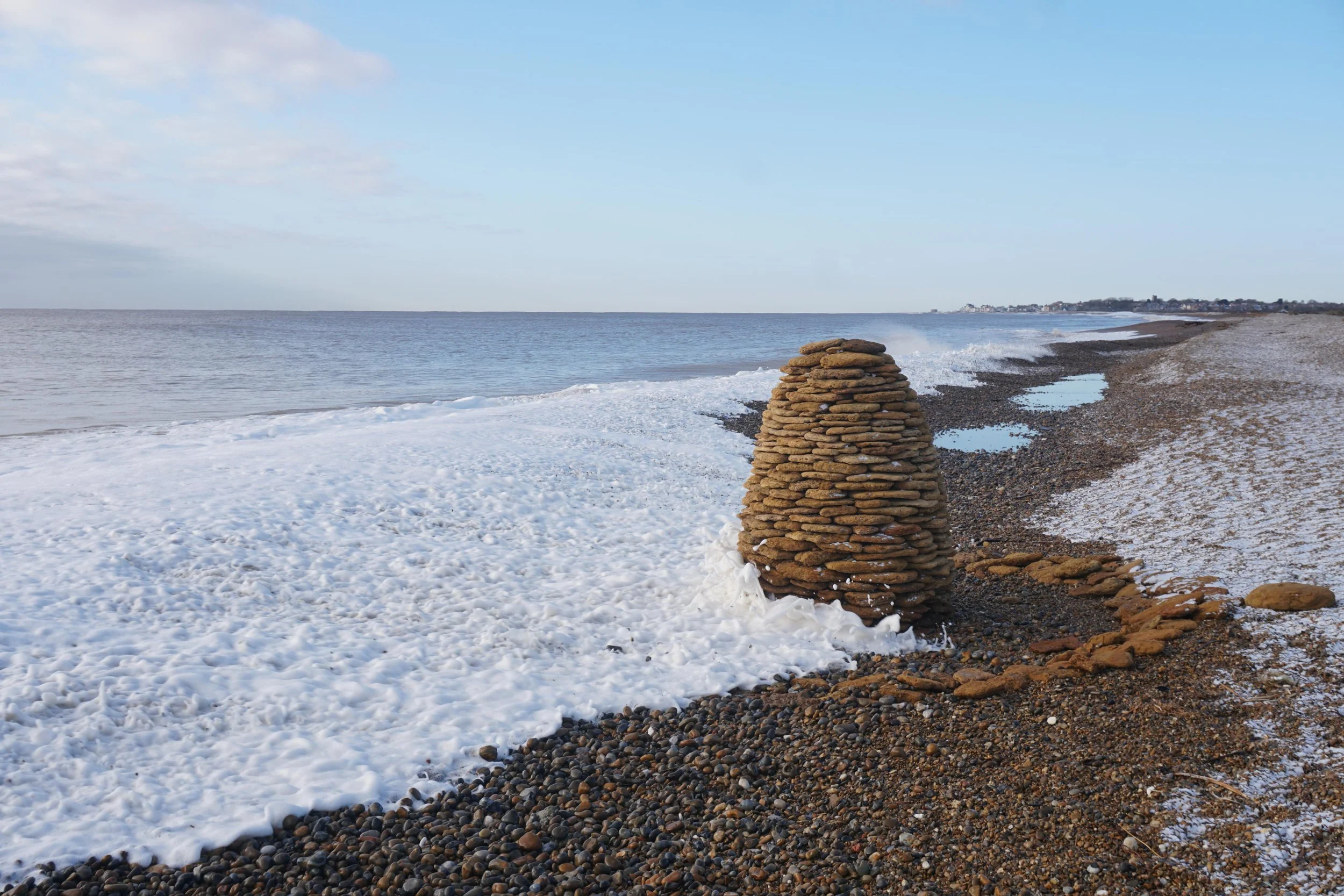
Feb-March, 2021, Thorpeness, UK: ten days of strong easterly winds churn the sea into a brown murky mess while the beach turns white. At low tide I notice coralline crag being unearthed by the storm’s energy so I start collecting the rocks from a kilometre stretch of shingle beach. I continue daily for two weeks then start to build in the intertidal storm zone. I’m inspired by Julie Brook’s ‘Fire Stacks’, also my work in Iceland, part of which has included building cairns with groups of volunteers.
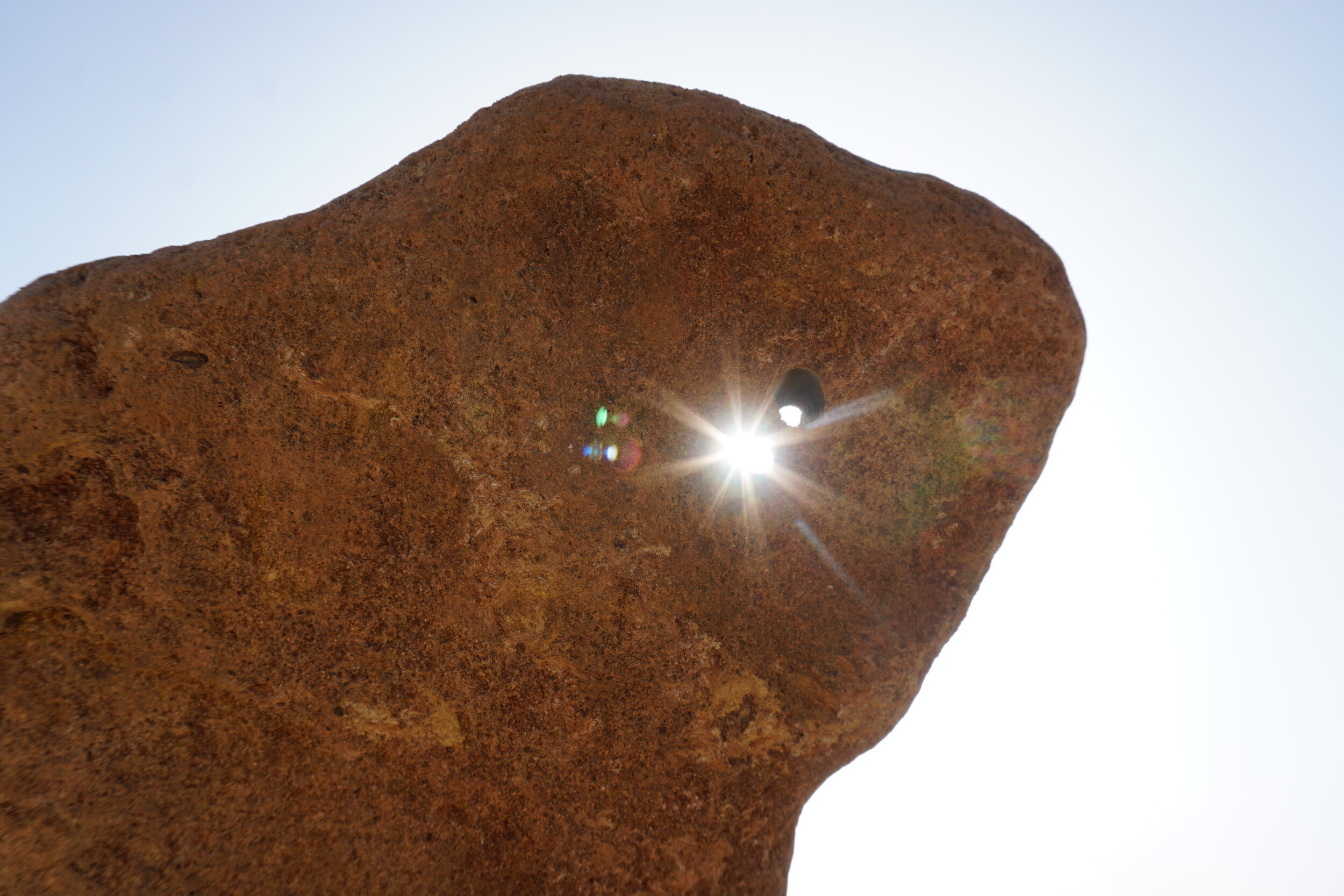
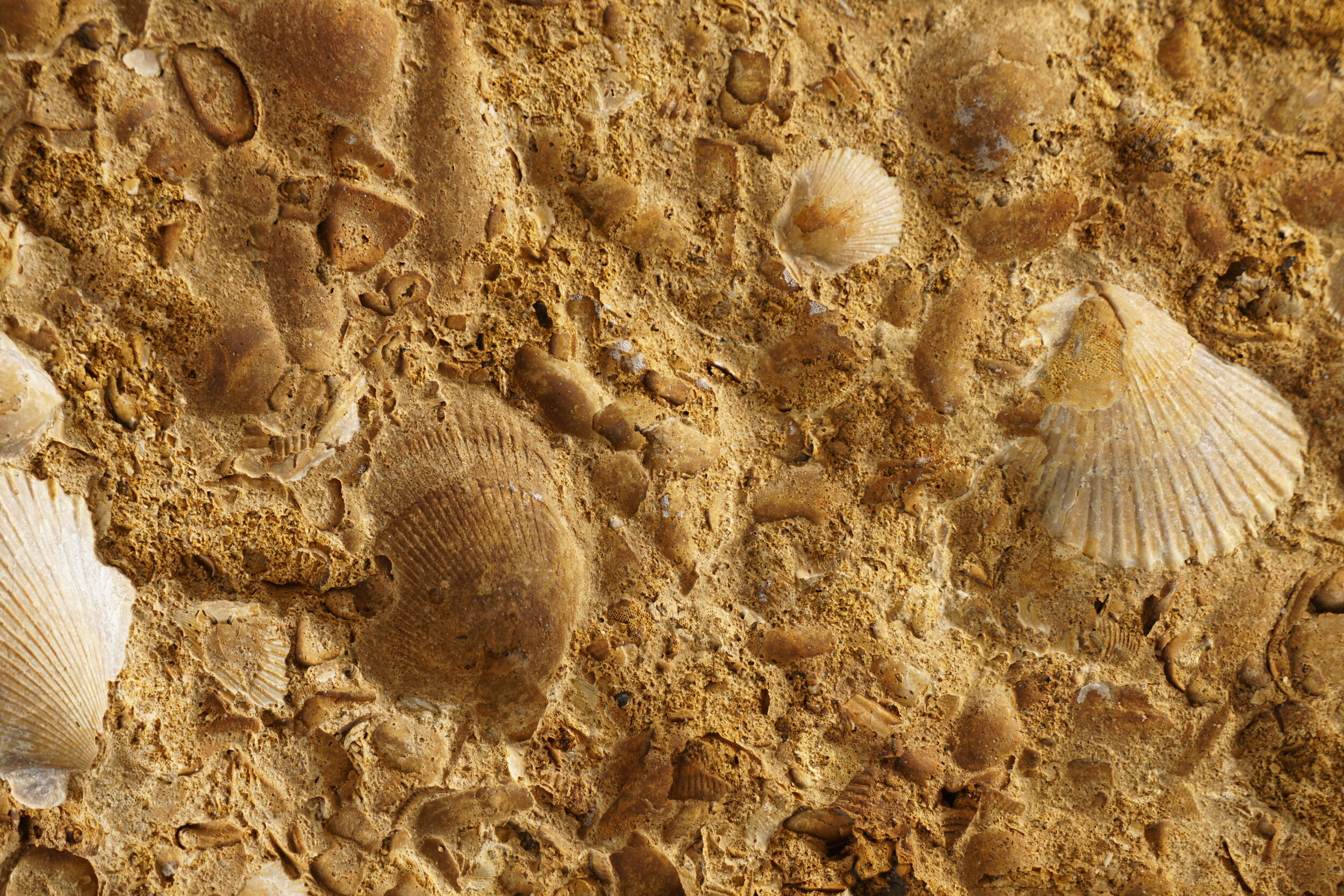

Fossils from the Coralline Crag. From Chatwin (1954).
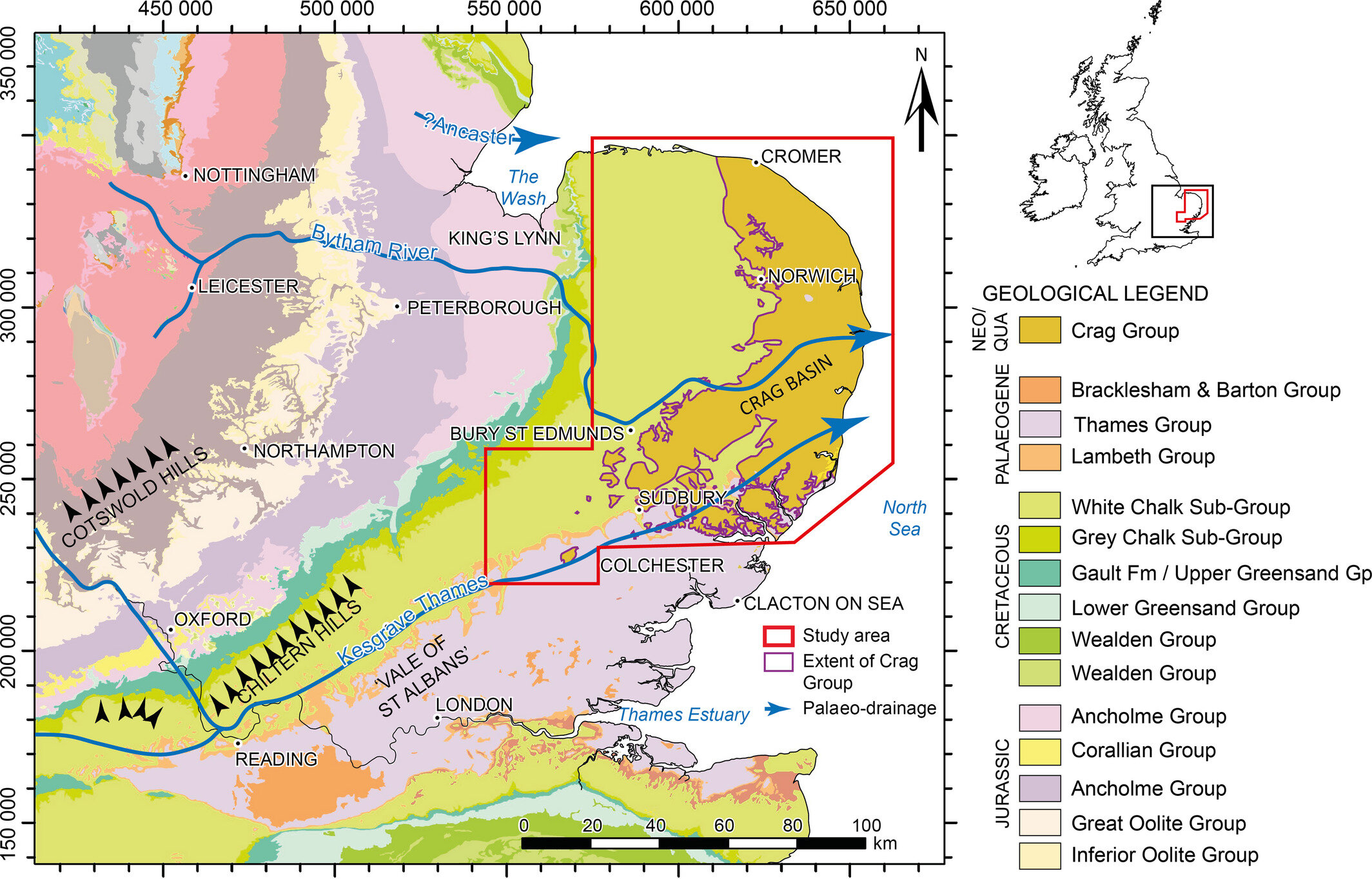
“Suffolk is the only place in the world where coralline crag exists (there is a seam stretching from Butley and coming to the surface beneath the sea at Thorpeness—which explains why so much is washed up on the beach). Crag is compacted fossilised seashells, but coralline crag is stronger because over thousands of years rainwater carrying calcium has percolated it which cements all the shells together”
AN UNEXPECTED TWIST
A local resident, Fiona MacKenzie, messaged me on my 40th birthday asking me to deconstruct my Coralline Cairn. She explained the sandstone cairn was causing her immense distress—had become an internalised symbol of her suffering. I originally intended for the cairn to be taken by a storm, so, after some discussion, I arrived at the conclusion that the storm had arrived in the shape of Fiona's request, or in the shape of Fiona herself! We set up a community event to collectively dismantle the cairn and return it to the North Sea. It was well-attended by 100 locals, and the evening was given a dramatic backdrop—with a ferocious and soaking thunderstorm rattling overhead.
In loving
and working
the crag I channel
its dreaming now
my own dreaming is a
collective dream rising
through a cairn
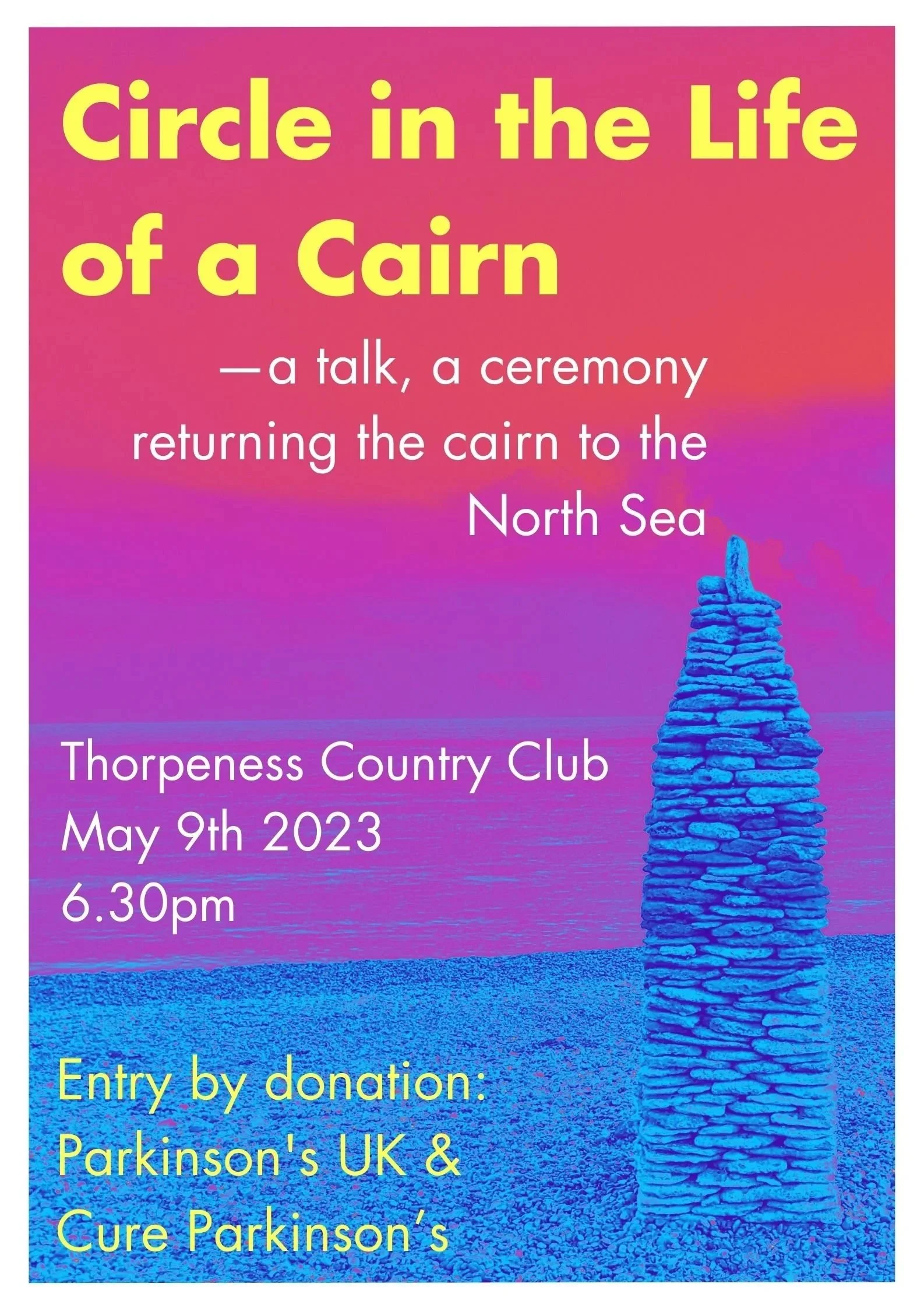
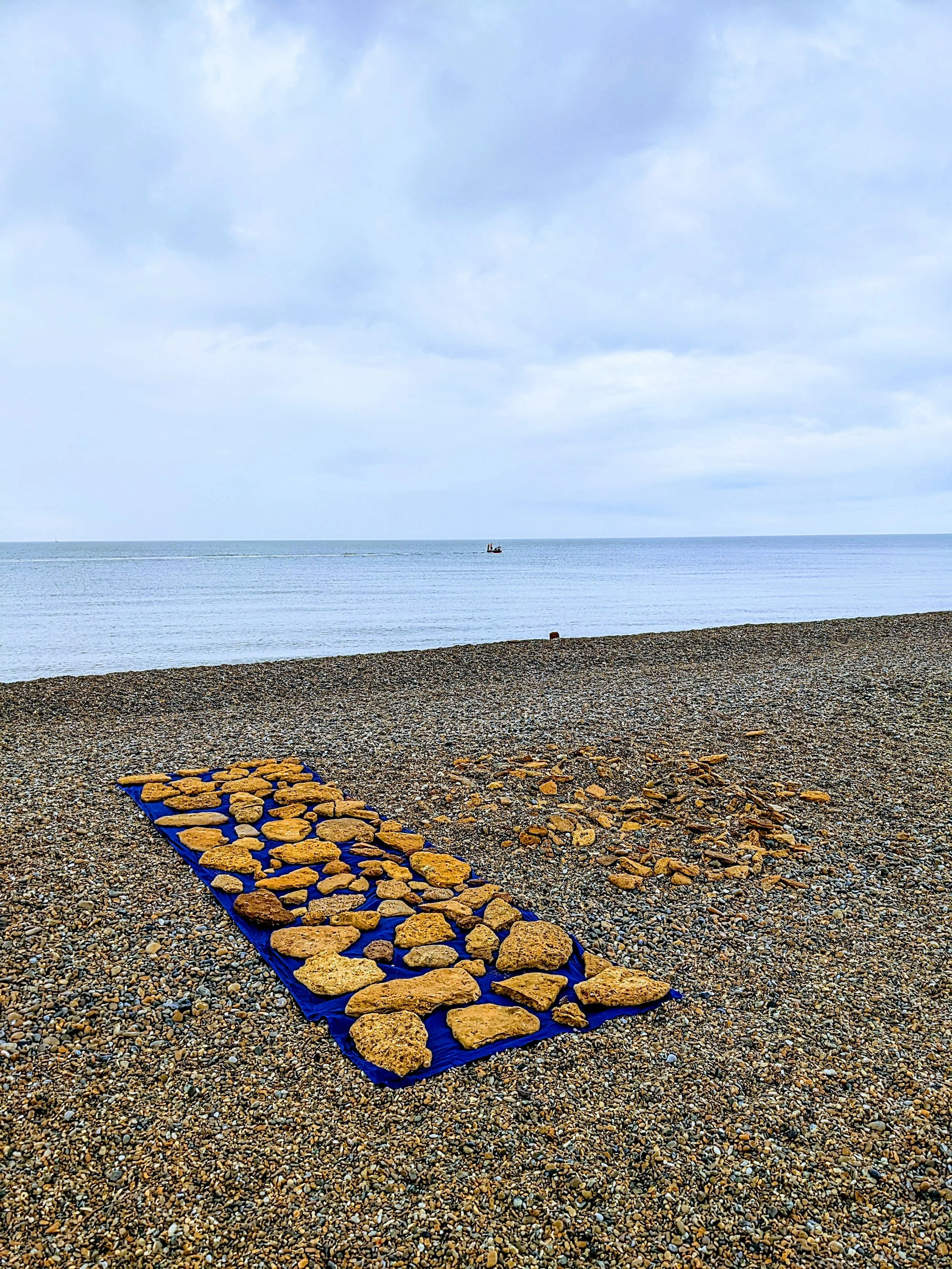
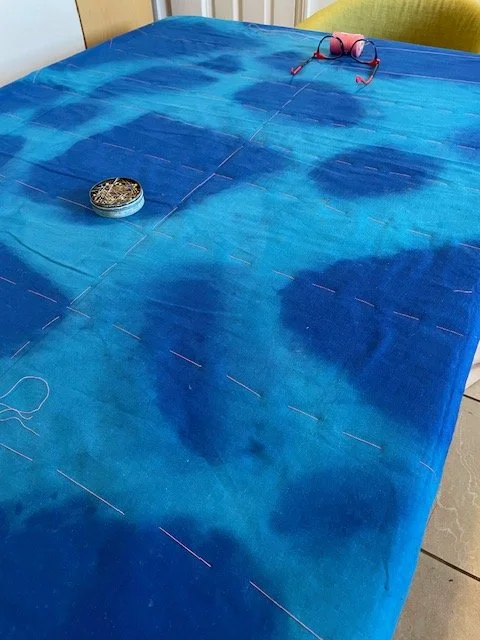
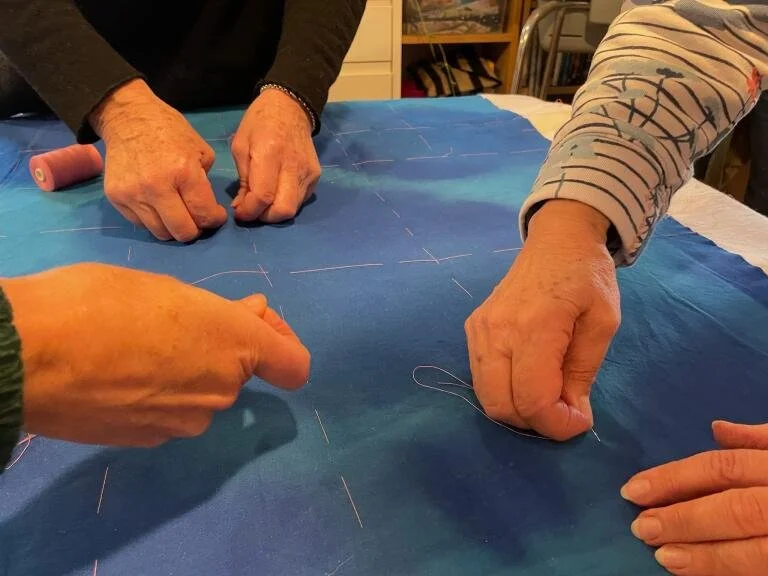
The event was run in support of Parkinson’s, a condition often given the colour of blue; so before the event we wrapped the cairn in a large blue cloth. I later laid this on the beach and covered it with some of the dismantled rocks. Over the course of some weeks the sun bleached the cloth around the rocks giving rise to a gorgeous 'island pattern'. Fiona subsequently took this 3 metre stretch of fabric and decided it would make a delightful quilt, so arranged for it to become a Parkie-community quilting project—wherein we have taken it into various support groups and had fellow Parkies stitch around the islands with variously coloured threads and put a quilt backing to the fabric.
Our friendship continues to evolve, so too our respective art practices and we have plans to tell the story of our unlikely friendship through an immersive exhibit in 2027.